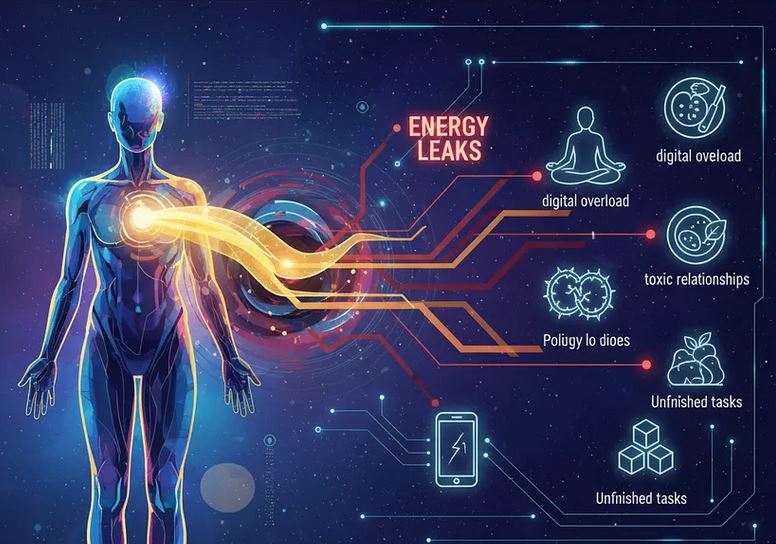
 How to Begin Recharging from Digital Overload
Digital overload often builds quietly and subtly over time. You scroll a little, respond to a few messages, watch a short video, switch between tabs, and repeat these actions continuously. None of these actions seems harmful on its own. Yet, together they create an overwhelming level of mental activity that leaves you feeling drained, unfocused, or strangely restless by the end of the day, affecting your overall well-being. Recharging from digital overload does not require cutting out technology completely. This is what happens…
Recharging from digital overload requires giving your mind regular chances to settle, process, and rest. One of the simplest ways to begin is by adding a pause before you open an app or check a device. That brief pause interrupts the automatic habit and invites you to choose whether you truly want to engage in that moment.
Short breaks away from screens are also very helpful for mental well-being. These breaks do not need to be long or complicated. Standing up, stretching, looking out a window, or stepping outside for a minute can help your thoughts slow down and reset. When you remove constant input, your mind has space to catch up, process, and regain focus more easily, ultimately enhancing productivity and clarity.
Reducing background stimulation is important, too. Closing unused tabs, turning off non-essential notifications, or lowering the volume of ambient noise all lessen the load on your attention. When your brain has fewer things to monitor at once, it can relax and focus more easily.
Slow, grounding activities can further support your recharge. Light movement, simple chores, drawing, reading, or preparing a meal give your mind a calmer rhythm to follow. These activities are not designed to excite you. They are meant to steady you. They help you reconnect with your body and surroundings instead of staying caught in digital speed.
Consider simplifying your digital routine. If certain apps leave you feeling more tense than informed, limit how often you use them. If you notice yourself switching between tasks frequently, choose one activity to complete before moving on to the next. These small boundaries protect your mental bandwidth. Recharging from digital overload is about balance, not restriction. You can still enjoy technology while setting limits that honor your well-being. With consistent small steps, you can create days that feel clearer, calmer, and more sustainable for your mind.
Recharging from Digital Overload: A Guide for Online Entrepreneurs
Digital overload often builds quietly and subtly over time. You scroll a little, respond to a few messages, watch a short video, switch between tabs, and repeat these actions continuously. None of these actions seems harmful on its own. Yet, together they create an overwhelming level of mental activity that leaves you feeling drained, unfocused, or strangely restless by the end of the day, affecting your overall well-being.
For online entrepreneurs and marketers, this challenge is even greater. Your business lives on your screen. Content creation, email, analytics, social media, messaging platforms, research, and learning are all essential parts of your success. The very tools that help you grow can also quietly deplete your mental energy if you’re not careful.
The key is not to disconnect from your digital world entirely—it’s to create intentional rhythms that allow your mind to recharge while still moving your business forward.
Why Digital Overload Hurts Your Productivity
When your brain is constantly switching between tasks, notifications, and platforms, it never fully settles into deep focus. This creates:
-
Decision fatigue
-
Reduced creativity
-
Slower thinking and problem-solving
-
Increased anxiety or restlessness
-
The feeling of being busy without making meaningful progress
Entrepreneurs often mistake this constant activity for productivity. In reality, digital overload keeps you reactive instead of strategic.
Recharging your mind isn’t a luxury. It’s a business strategy.
Signs You May Be Experiencing Digital Fatigue
You might be dealing with digital overload if you notice:
-
Checking your phone or social media without thinking
-
Difficulty concentrating on writing or creative work
-
Feeling mentally tired even after a short work session
-
Starting many tasks but finishing few
-
Feeling pressured to always be “visible” online
Awareness is the first step toward change.
The Entrepreneur’s Digital Recharge Plan
Here are simple, practical ways to restore your focus and energy without stepping away from your business completely.
1. Create Focus Blocks Instead of Constant Access
Choose one primary task and work on it for 30–60 minutes with all notifications turned off.
Examples:
-
Writing a blog post
-
Creating social media content for the week
-
Recording a lesson or video
-
Planning your next offer
When you work in focused blocks, your brain relaxes because it’s no longer juggling multiple streams of information.
2. Schedule Social Media Time (Don’t Let It Schedule You)
Instead of checking platforms throughout the day, set specific windows such as:
-
20 minutes in the morning to engage
-
20 minutes in the afternoon to respond and post
This keeps you visible and connected without allowing social media to fragment your attention.
3. Build Micro Breaks Into Your Day
Your brain needs short resets to maintain clarity.
Try:
-
Stepping outside for 5 minutes
-
Stretching or walking
-
Closing your eyes and taking slow breaths
-
Drinking water without looking at a screen
Even small breaks reduce mental overload and improve decision-making.
4. Practice Single-Platform Days
If possible, dedicate certain days to one primary channel.
For example:
-
Monday: Blog writing and email
-
Tuesday: Social media content creation
-
Wednesday: Product or course development
This reduces the mental strain of constant platform-switching.
5. End the Workday with a Digital Shutdown Ritual
Instead of working until you’re exhausted, create a simple closing routine:
-
Write down tomorrow’s top three priorities
-
Close all tabs and applications
-
Log out of social media
-
Step away from your workspace
This signals to your brain that the workday is complete, allowing true mental recovery.
The Visibility Myth: You Don’t Have to Be Everywhere
Many entrepreneurs fear that stepping back will hurt their visibility. The truth is:
Consistency beats constant presence.
A thoughtful blog post, a scheduled email, or a week’s worth of planned social content creates far more impact than scattered activity throughout the day.
Strategic visibility grows your business. Constant digital noise drains it.
Protecting Your Creative Energy
Your ideas, insights, and voice are your greatest business assets. But creativity requires mental space.
When your mind is filled with endless scrolling, notifications, and comparison, there’s no room left for original thinking.
Digital boundaries create the quiet space where your best content and business ideas are born.
A Simple Daily Reset
If you want one powerful habit to start today:
Before opening any social media or email, spend the first 30–60 minutes creating something.
Write. Plan. Outline. Record. Build.
Creation first. Consumption later.
This single shift protects your energy and keeps your business moving forward.
Final Thoughts on Recharging From Digital Overload

Digital overload doesn’t happen because you’re undisciplined. It happens because you care about your business and want to stay informed, visible, and connected.
But sustainable success comes from managing your attention, not just your time.
When you create intentional digital boundaries, you don’t fall behind.
You think more clearly.
You create more meaningful content.
You make better decisions.
And you build your business with calm, focused energy instead of constant exhaustion.
The Digital Overload Reset Checklist: A Calm, Focused Approach
for Online Entrepreneurs, Marketers, and Content Creators
Use this checklist daily or weekly to reduce digital fatigue, protect your energy, and stay productive without burning out.
Step 1: Start the Day with Creation (Before Consumption)
☐ I spent at least 30–60 minutes creating before checking email or social media
☐ I worked on one high-value activity (writing, content, product creation, planning)
☐ I avoided unnecessary scrolling during my first work block
Step 2: Set Clear Focus Blocks
☐ I chose one priority task for each work session
☐ I turned off notifications during focus time
☐ I worked for 30–60 minutes without switching tabs or platforms
☐ I completed or made meaningful progress on my priority task
Step 3: Control Social Media (Instead of Letting It Control You)
☐ I checked social media only during scheduled times
☐ I limited engagement to a specific time window (15–30 minutes)
☐ I avoided “just checking” throughout the day
☐ I posted or engaged with intention, not out of habit
Step 4: Take Micro Digital Breaks
☐ I stepped away from screens at least once every 60–90 minutes
☐ I stretched, walked, or looked outside
☐ I took a few slow breaths to reset my focus
☐ I hydrated and rested my eyes
Step 5: Reduce Platform Overload
☐ I focused on my primary platform instead of trying to be everywhere
☐ I batched similar tasks (content creation, engagement, email, etc.)
☐ I avoided unnecessary tool or tab switching
☐ I reminded myself: Consistency beats constant presence
Step 6: Protect Your Creative Energy
☐ I limited comparison scrolling or content consumption
☐ I captured my ideas instead of immediately searching for more information
☐ I spent more time creating than consuming
Step 7: End the Day with a Digital Shutdown Ritual
☐ I wrote down my top three priorities for tomorrow
☐ I closed all tabs and applications
☐ I logged out of social media
☐ I stepped away from my workspace with a clear mind
Your Daily Reflection
At the end of the day, ask yourself:
☐ Did I create more than I consumed?
☐ Did I work with focus instead of constant distraction?
☐ Do I feel mentally clear instead of digitally drained?
Remember:
You don’t need to be online all the time to grow your business.
Calm focus, intentional visibility, and protected energy will take you further than constant digital activity.
Your attention is your most valuable business asset. Protect it.
I’m bestselling USA Today and Wall Street Journal author Connie Ragen Green. My goal is to help at least a thousand people to reach six-figures and beyond with an online business for time freedom and passive income and to simplify your life by recharging from digital overload, and following your purpose to be a risk taker. Come along with me, if you will and let us discover how we may further connect to achieve all of your dreams and goals. Perhaps my “Monthly Mentoring Program” is right for you.
Leave a Reply